Saturday, May 8, 2021

Puthumana Govindan Namboothiri - Emperor of Indian Temple Dance

 Puthumana Govindan Namboothiri - Emperor of Indian Temple Dance


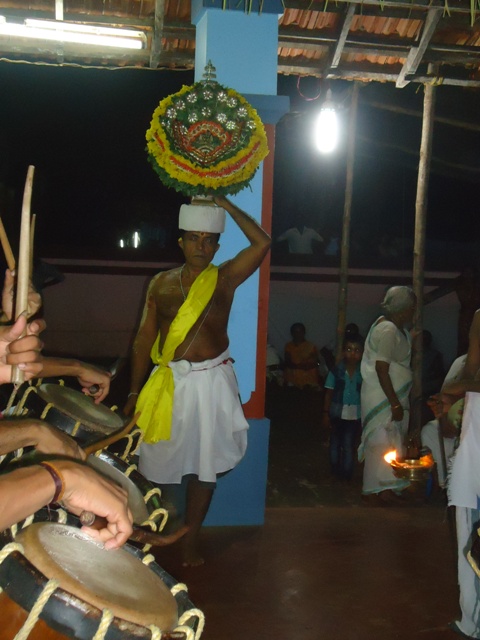
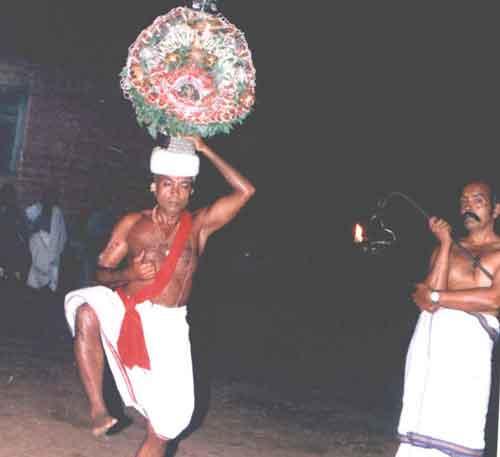
Thidambu nritham is a seven century old Indian Temple dance now being very popular in the state of Kerala. Other dance forms popular in Kerala include Kathakali, Ottanthullal and Chakyar koothu. While Kathakali was earlier a temple dance, later it was taken to stage performance. Thidambu nritham has become popular through the dedication and efforts of legendary artist Puthumana Govindan Namboothiri. In thidambu nritham, there are mainly four rhythms thakilatiatanthachempata and panchari followed by ekataala. There are few similarities between performance in Kathakali and Thidambu nritham, but differences are many. Puthumana Govindan Namboothiri maintains the old traditions and steps of Thidambu nritham in his performance blended with new steps invented by him appearing under the trend of the recent times. There is no scope for acting, expressions and other representations during thidambu nritham performance. Nevertheless, Govindan Namboothiri has successfully translated essence of old Indian theology, cosmology and mythology through manifestations in thidambu nritham including works centering on siva purana kaliya marddana and  presentations on selected texts in akroora bhakti. In his  thidambu nritham performances, the dance progresses from slow movements and steps like in kerala dance mohiniyattam ascending to quick foot movements at higher rhythms. Dance scholars exclusively mentions that in Govindan Namboothiri’s performances, change from one rhythm to other and change is steps in the ascending order from slow movements to quick movements is highly classic and extremely impressive. They endorse that Govindan Namboothiri is an emperor of Indian dance, like many exponents in Kathakali representing the rich cultural traditions of southern part of the country.

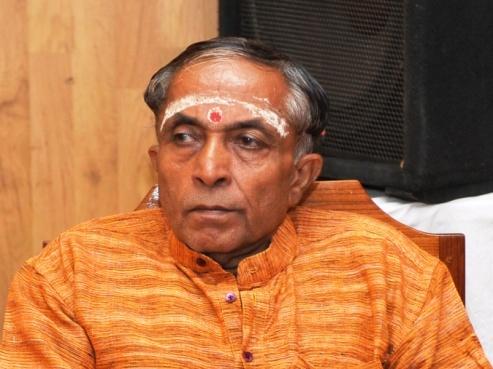
Legendary Indian Dance Exponent ‘Kala Shri’ Puthumana Govindan Namboothiri


Legendary Indian Dance Exponent ‘Kala Shri’ Puthumana Govindan Namboothiri


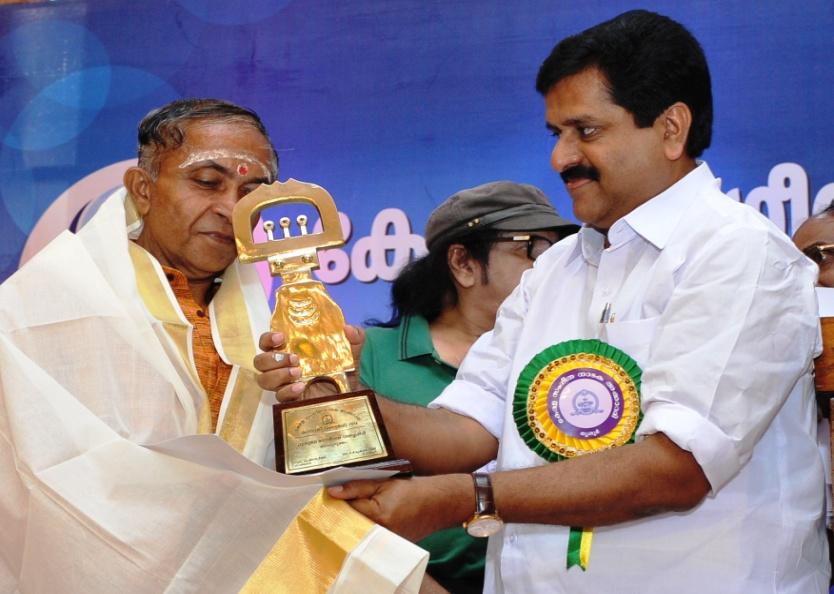
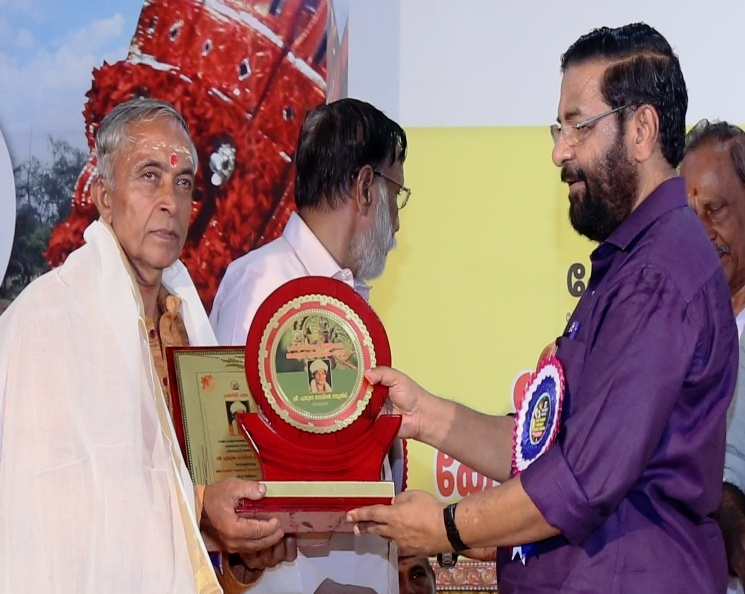
Thidambu nritham is an Indian temple dance originated in northern part of Kerala, a state in India, like the traditional dance form Kathakali . Puthumana Govindan Namboothiri is an exponent of thidambu nritham who has popularized this dance form to various parts of India. He has redefined, rejuvenated and innovated on thidambu nritham. Govindan Namboothiri has worked on the basics of this dance form, extracted  its ‘artistic contents’ by separating it out from ritualistic nature and modified it in such a way that the dance could be presentable on open stage in front of millions. He enjoys and appreciates Kathakali, a classical Kerala dance form. He has dedicated his life to thidambu nritham for more than fifty years. The hard work of Govindan Namboothiri  is far and wide acknowledged and cherished all over the world. It was an amusing astonish for the audience of Kerala to see Govindan Namboothiri performing thidambu nritham in open air by taking it out from the boundaries of the temple premises. It had created revolution like the way Kathakali exponents had contributed earlier in the 19th century in various parts of Kerala. For more than six decades of dedication to the field, Govindan Namboothiri has received numerous awards from the state of Kerala and outside as well. Considering his contributions to the field of art, Government of Kerala has awarded him with the highest honour, the prestigious Kerala Sangeetha Nataka Academy Kala Shree title and KSNA award in the year 2014. He had received the award in 2015 from Devaswom minister V S Sivakumar in 2015. It was a new beginning and establishment of a history because Govindan Namboothiri was the only thidambu nritham artist to receive Kala Shree title, while several Kathakali and other leading exponents in his close association junior to him had received it much earlier.  Recently, Govindan Namboothiri has received the first Kerala State Kshethra Kala Academy award for the year 2017. He has received the title Kshethra Kala Shree  and state award in 2018 and has again established his distinction in the field of dance. He has accepted the title from Devaswom minister Kadakampalli Surendran and the whole country salutes ‘Guru ji’ Govindan Namboothiri, the honour which artists from other dance areas including Kathakali precisely appraise him.

Effulgence of Progressive Dance Waves

 Effulgence of Progressive Dance Waves

about Indian temple dance – ‘thidambu nritham’ exponent
Kalashree. Puthumana Govindan Namboothiri

A C Babu
Puthumana Govindan Namboothiri, thidambu nritham exponent, one of the living legends in Indian Temple dance has recently received prestigious first Kerala State Award by Temple Art Academy of the Govt of Kerala. Puthumana Govindan Namboothiri is not pretending to be a living legend. As usual, every day from 4 am, he starts his regular practice sadhakam in four rhythms – thakilati, atantha, champata and panchari like a Kathakali artist. Yes, for Puthumana Govindan Namboothiri temple dance is life. I have known him since his debut dance performance at Adhiyamboor Subrahmanya Swami Temple in Kanhangad from which he started exhilarating incredible heights in the minds of dance viewers including Kathakali exponents. It had been more than fifty years, and his dance performances have created a new history in the country. The legend of dance, the pioneer has been in the limelight. Cruising ahead in the leaping charm of a prince, the thidambu nritham legend has been invited to perform in numerous dance festivals in India. He started when he was just five. He swimmed across the vast ocean of dance thidambu nritham learning and teaching, innovating and creating. He had chosen his life devoted to dance, a fighter, as evident from his strong decision, when he was just 13! Since then, it was an evolution of a new language in dance thidambu nritham, originator being Puthumana Govindan Namboothiri. This language was unconditionally acknowledged by the amateur. This approach had erased all the harsh and disturbing scripts rewriting with a heart-to-heart communication of love through dance without any barriers like in Kathakali. Puthumana Govindan Namboothiri’s experiments were questioned by the critics and traditionalists in dances including Kathakali, nonetheless they endorsed that performance was on the top. Puthumana Govindan Namboothiri has won numerous formal accolades the only one thus far to receive these awards- such as Kerala Sangeetha Nataka Academy ‘Kalashree’ Award, Kerala Tourism Award, etc. His notable thidambu nritham performances have generated most life-affirming moments in dance. Puthumana Govindan Namboothiri has created a story for himself in every juncture. His intuition had been to uncover the concealed secrets of truth through the medium of dance.  His creations referred by the scholars outside the country have led to an enriching cross-fertilization of the most stunning class. He had elated crowds in all his concerts and many are keenly in anticipation of!

Puthumana Govindan Namboothiri, renowned Indian thidambu nritham exponent was honored by Kanhangad Shuttle Badminton club at Padnekkad, Kanhangad on 27th of July 2018 (Photographs courtesy: Mr. Madhu Poduval, Kanhangad)


Puthumana Govindan Namboothiri, renowned Indian thidambu nritham exponent was honored by Kanhangad Shuttle Badminton club at Padnekkad, Kanhangad on 27th of July 2018 (Photographs courtesy: Mr. Madhu Poduval, Kanhangad)

Chemmattamvayal Snehatheeram Vayojana Kendra, Kanhangad in Kerala State, India Honor to Indian Dance Legend Puthumana Govindan Namboothiri 20th of May 2018


Chemmattamvayal Snehatheeram Vayojana Kendra, Kanhangad in Kerala State, India
Honor to Indian Dance Legend
Puthumana Govindan Namboothiri
20th of May 2018


Kalasri. Puthumana Govindan Namboothiri - at the zenith of Indian Temple Dance


Kalasri. Puthumana Govindan Namboothiri - at the zenith of Indian Temple Dance

Navaneeth Maniyoor

Renowned exponent of Indian dance Puthumana Govindan Namboothiri is in a sacred space of my mind from childhood. The dance legend had the distinctive opportunity to succeed hearts of thousands by unbelievable thidambu nritham performances in the temple premises even at age of eighteen. We had not given much importance to thidambu nritham performance at temples, but the outlook had radically changed after Puthumana emerged. I do not think there are any temples in Malabar which has not witnessed the glorious and mystical dance of Puthumana Govindan Namboothiri. Similar to Kathakali art is tantamount to the state of Kerala, Puthumana Govindan Namboothiri is dissolved in the depths of pure temple dance. Puthumana is awarded with two celebrated state awards recently – Kalasri title by Sangeet Natak Academy and Kshetra Kala Sri by Kerala Temple Arts Academy.

Puthumana started practicing thidambu nritham at the age of 5, but classical instruction was provided at the age of 17. He was so zealous to gain knowledge of the art due to which he could establish his first show within a few months. The feedback on the first one itself was hopeful to all. Apart from footsteps harmonized with the pulsation of rhythm, the ‘bhavachaarutha’ and ‘manodharma’ apparent by the crowd was indescribable. The kind of different conduct in thidambu nritham dance was the only one eternally in history. Puthumana was at the pinnacle at all times and is ongoing the sensation chronicle.

Puthumana Govindan Namboothiri devoted every second of his life to art thidambu nritham. In contrast to ‘mudras’ and ‘cholliyattam’ in Kathakali, engagements of the foot reveal the contribution in thidambu nritham. Puthumana has worked, reworked and invigorated thidambu nritham. Knowing the inadequacy of the dance that there is no scope for expressions, Puthumana has researched on this theme. Inside a period of quite a few decades he has formed the ‘big change’ – through conceptual translation of the summary of ‘sivapurana’, ‘kaliyamardana’ and ‘akroorabhakti’ – realized in the language of dance. Puthumana creates an implausible ‘laya’ during the changeover of steps from each of four basic rhythms – thakilati, adantha, chempata and panchari; like abstracts of four Vedas – four forms of manifestations in dance. As experienced by many, a viewer is competent enough to envisage the golden stroke of god during his performances. In the ‘Keraleeya’ dance Kathakali, there are many masters we admire. Puthumana ris also a supporter of Kathakali dance, but for him, thidambu nritham is his life. A big salutation to the ultimate temple dance genius!

Wednesday, April 28, 2021

Thidambu Nritham – a spiritual journey - Anil

 C:\Users\VINEESH\Desktop\PGD_8390.JPG

Image result for thidambu nritham puthumanaI remember an interview in all india radio 18 yrs back – guest of honor the legendary icon, thidambu nritham dance exponent and the ‘celestial thaandava’ dancer Puthumana Govindan Namboothiri; titled ormayile yavanika. He had given enlightenment to the listeners and replies for all the questions of the interviewer. Thousands of his admirers were not aware of his hardships and trainings. His debut performance was in Kanhangad, his native place and the event was roughly 50 yrs before; still, he is at the top. In those days, thidambu nritham was observed as a ritual in temples. Govindan Namboothiri has invigorated the dance – brought in noteworthy innovations, without rousing the originality and ritualistic traditions. ‘My ambition and passion since the age of 5 has been thidambu nritham and it continues..’ what else other than a life committed to thidambu nritham dance.. He explains the rudimentary methods and painful experiences he had during his initial days of training. ‘chavittithadal and training in the four fundamental rhythms are the basics’. Even now, he wakes up at 3 early in the morning and trains himself and disciples thidambu nritham till sunrise. Thidambu nritham is celebrated in a temple during annual temple festival. ‘In a temple, though the seva samiti invites me for the performance, it is the chief priest who gives final permission to me, because it is a divine art.’ In his words - ‘Thulasi, Chethi, Jamanthi and Mulla are main flowers used to decorate thidambu’. The color of the flower to be highlighted in the  garland depends on the main deity. ‘The dance begins with chenda melam followed by an important ritual ‘kotti urayikkal’ beginning at  north side if main diety faced eastwards, and if faced westwards, the ritual begins at the south side’. There are customary rhythms based on which thidambu nritham is structured – thakiladi, adantha, champada and panchaari further to conclude with ekathaalam. Govindan namboothiri had sacrificed each instant of his life for the development of art thidambu nritham. Several cultural organizations and temples honored the exceptional artist over the years, and the spiritual journey of the thidambu nritham legend continues. Unsurpassable divine dancer!

C:\Users\VINEESH\Desktop\PGD_8520.JPGC:\Users\VINEESH\Desktop\IMG_3659.JPG

Thursday, April 22, 2021

Puthumana : A blissful experience in temple dance

Baiju Sankar


Puthumana Govindan Namboothiri is the artist of temple art thidambu nritham related to temples in Kasarkode, Kannur and Calicut districts. Puthumana is the singular synonym for the master of temple dance, learned temple dancer, unique temple dancer and refined temple performer in India. Puthumana started the journey with thidambu nritham at age of 5, with an association with temples. He has seen many popular Kathakali and Koothu dancers too at temples. Puthumana is a worshipper of thidambu nritham for 60 years, and is the revivalist who took thidambu nritham to worldwide, intercontinental and international stages. Puthumana had a purpose, vision and mission of lifetime to rejuvenate the dance from fading position. When we perceive with eye or ear the words temple dance or thidambu nritham from anywhere in world, a picture of dancer puthumana govindan namboothiri will be depicted in our mind.

Puthumana Govindan Namboothiri studied till the tenth and used full time for thidambu nritham practice. Puthumana's first guru was his uncle, and he say that entire world is his guru and is a constant learner. The dance thidambu nritham is developed through him and development happened also through observation and inspiration from nature. At this old age also Puthumana is able to do anything and everything in thidambu nritham.

The temple dance of Puthumana ji is very emotional, expressive; but there is involvement of foot movement only. Puthumana releases devotion and emotion in steps. For the audience, Puthumana's dance is a enlightening experience and the programme will be very energetic, divine with entertainment. The secret of Puthumana ji's uniqueness is inhererent training, intense training and self training in gurukula style each day without break. Puthumana enriched himself in last 60 years. Puthumana Govindan Namboothiri is the leader and leading anchorman of temple dance in Kerala. He leads all temple festivals in North Kerala.The dancers from Kathakali and Koothu see him with big respect and devotion. The audience believe that the blissful blessings and excellence in the footwork of Puthumana Ji is God's grace to place him at the pinnacle of Indian temple dance. The encouraging comments and notable honors to Puthumana Ji were many which repeated again and again, decade by decade. The support happened repeatedly from many people that too from different parts of the world. The sweetness, dancing styles, varities and variations in steps invocated into his feet are irreplaceable. The emotions sounded by the steps are transferred to viewers in the world. The great dancer has fulfilment, happiness, enthusiasm and satisfaction to transfer knowledge to others in concerts, lectures, demonstrations, interviews. He trains all types of people right from scholar to laymen in stage programmes. A viewer lives through perpetuity of step variations during this incomapable experience.

Puthumana, the blessed master of temple dance and encyclopedic exponent of thidambu nritham is very modest, unassuming and down to earth person.

Puthumana Ji has a formidable position in Indian temple dance. His decision to take the 'creative', 'inventive', 'perceptive' and 'aesthetic' part of thidambu nritham to people from all classes outside the temple boundaries has invited criticism. Puthumana has innovated on thidambu nritham, but self-effacing however determined; and stood strong unwaveringly. With the tenacity, fearlessness and endurance he got from deep knowledge, he experimented and innovated again and again on thidambu nritham. The artistic excellence and performance of Puthumana Ji is beyond comparison and his ability is shooting up with age. The articulations and emphasis of devotion Puthumana displays in the steps transferred to devotees as emotions of devotion and worship creates a tower of pure reverence. In last 60 years, Puthumana transformed the temple surrounding to a place of heavenly angelic experience and open stages to blissful artistic experience.

The International Icon of Indian Temple Dance

Baiju Sankar

Puthumana Govindan Namboothiri is an Indian Temple dancer and artist from Kerala. He is the incomparable stalwart of temple arts who devoted and sacrificed all moments of his life for revival of declining temple art thidambu nritham. Puthumana believes in traditionalistic approach in thidambu nritham added with numerous inventions of rhythms and steps. Puthumana is the sole artist alive who is proficient, competent and accomplished to present the 700 years old 'golden' steps in the feet, and remains unmatched. The distinctive style of Puthumana is loved, treasured and favoured not only by dance followers of India, but also admirers from several nations worldwide. Puthumana says that thidambu nritham should not be confined within the boundaries of the temples. Puthumana is appraised as the personification and manifestation of the thidambu nritham temple dance, for his contributions in revival of the dance. Puthumana brought a cultural identity to temple ritual thidambu nritham as a temple dance as symbolic and embalatic of south Indian culture representation. Puthumana went behind Thidambu nritham as early as age of 5, in childhood. He grew to a full time learner and performer after passing matriculation, spending each moment of life and twenty-four hours diligence, enthusiasm and commitment to thidambu nritham. Puthumana gets up every day morning at 3 am, and starts sadhakam, which is a pattern of life accustomed by him for 60 years. Puthumana had been fully engrossed in thidambu nritham into the classical gurukula training. He believes that state of mind, discipline and regular practice is a must for all temple dancers also for Kathakali. He has invented new styles and combines new steps into the styles in thidambu nritham. Puthumana has been spending a lot of time for all his followers, viewers and crowd. He is also a role model for all in punctuality, honesty and sincerity. Puthumana had the rare opportunity to present thidambu nritham with greats from other dance fields. Puthumana believes that dance has an all-inclusive, all-round, all-embracing international language. Puthumana has the openness to connect with any artist and art type. Puthumana makes thidambu nritham an experience of ecstasy, in which he is a learner, he is a presenter and where only himself and audience are present. Puthumana, another element of happiness, integrates with the delighted international minds...

Temple artist Pudhumana Govindan Namboodiri

Pudhumana Govindan Namboothiri is an Indian artist who created a significant mark of his own on temple dance. He is the dominant persona and discoverer of present-time thidambu nritham dance. The long-time leadership and supremacy in the temple dance were manifested by the great by way of boundless ingenuity, inventiveness, individuality, and taking care of originality. Pudhumana Govindan Namboothiri is well-liked by the world for his original and pure Indian class of temple dance. His finest contributions include detailed and minuted translations of kaliyamarddanam, akroorabhakthi, sivathandavam, sasthapreethi and deveevandanam. Pudhunmana holds the supreme position in the saga of renascence, revival, and rejuvenation of Indian temple dance thidambu nritham.

Pudhumana is exceptional in harmonizing and integrating delicate divisions of moves and gestures in the dance. He is real and authentic in every footstep with the propensity to array up disjunctive schemes into an unrepeatable consolidation strategy for building a new concept of temple dance movement in stages open to all. Pudhumana is a blend of unquenchable inquisitive thoughts on one hand and huge emotion and excitement to devotion on the other. The composite pattern of artistic amazement of Pudhumana is approachable to the public.

Monday, August 31, 2020

Mohiniyattam

There is no precise historical evidence to establish the antiquity of Mohiniyaattam, the classical female dance-tradition of Kerala. Probably it was evolved in the eighteenth century. In the court of king Swathi Thirunal who ruled Travancore (South Kerala) in the 19th century Mohiniyaattam flourished along with Bharatanatyam, the classical dance of Tamil Nadu. The post -Swathy period witnessed the downfall of Mohiniyaattam. ‘The dance of the enchantress’ slipped into eroticism to satisfy the epicurean-life of some provincial satraps and feudal lords. Poet Vallathol rescued Mohiniyaattam form total extinction. It was added to the curriculum of Kalamandalam in 1930.

The make-up and dressing of Mohiniyaattam is simple and semi-realistic. The dancer’s face is made up of yellow and pink-paste. She wears sandal-colored jacket and sari. Jasmin flowers adorn her tied-up hair. She decorates her eyes with KAJAL and the lips are reddened. The traditional theme of Mohiniyaattam is devotion to and love of God. Vishnu or Krishna is more often the hero. This dance-form explores all the subtleties of the expression, Sringara, in all the items performed. We feel his invisible presence when the heroine or her friend (Sakhi) portrays him through hand-gestures, soft, undulating and circular body movements. In the slow and medium tempos the dancer finds adequate space for improvisation and suggestive facial-expressions, the invocation of Mohiniyaattam is known as CHOLKETTU. JATHISWARAM, VARNAM, PADAM and THILLANA are other items in a Mohiniyaattam-recital. Varnam is the piece de resistance in Mohiniyaattam.Thillana unfolds to the audience the dancer’s rhythmic virtuosity. Padam focuses on ABHINAYA. Mridangam, Violin and Edaykka lend excellent support to the vocal music and to the visual-rhythm of Mohiniyaattam.


Thullal

Thullal is the successor of Kathakali. Kunchan Nambiar who lived two centuries ago, wrote the text of Thullal and choreographed it for the stage. All the forty or more Plays of Thullal composed by Kunchan Nambiar are replete with humor, sarcasm and social-criticism, Thullal has three divisions- Seethankan, Ottan and Parayan. The distinction between them lies mostly in the make-up and costumes and to some extent in the metres and the rhythm applied. Thullal often reflects the literary, artistic and cultural life of the medieval Kerala. In Thullal, episodes from the Indian Epics are retold in simple Malayalam poetry. The stylized singing of the lines carries with it the beauty of the dravidian metres. A rasika once called Thullal ‘the poor man’s Kathakali’. Thullal is a solo performance. As a semi-stylized dance-theatre-narrative, Thullal is a more popular entertainment than other temple-arts. The performer establishes powerful communication with the audience through verbal-acting which is interspersed with humor and social references.

Wednesday, August 19, 2020

‘My lifetime devotion to thidambu nritham was God’s plan’ – Puthumana Govindan Namboothiri

Ranjan Mohapatra

Puthumana Govindan Namboothiri is the finest exponent or master in Indian temple dance thidambu nritham. Puthumana is the sunshine on stages at this age also. The voyage was long more than sixty years. Thidambu nritham is a ritual dance performed by carrying the thidambu (replica of the deity of Gods and Godesses) on head. Puthumana is one and only blessed artist in whose performances the ritualistic signs of the presiding God or Godess appear, but unintentionally. Puthumana’s thidambu nritham had been heavenly unique, magical and unsurpassed. The humble artist says ‘I haven’t done anything. I apply whatever I’ve learned and do as disciplined, dedicated daily practice in the early hours of the morning. It’s only God’s grace and blessings of all gurus and elders’. Puthumana applies his full concentration on the performance with great zeal and enthusiastic attention whole the time. Puthumana evokes and invokes to the inner soul and offer prayers to keep in mind the permanent denotations, gestures and demeanor of the governing god and goddess, before entering on stage. Puthumana speaks about thidambu nritham. ‘At the commencement of the dance, I forget any kind of mental or physical uneasiness in me. My reverence is to god to enter into my heart and foot movements. I do not see or hear what others do at that time.’. Puthumana showcase his intellect and prowess as manodharmma in a very sensible style. His awareness in the natyashastra  and basics is huge. He thinks that his consecration to thidambu nritham was decided earlier by God. He surrenders to god like a solemn vow, which he thinks comes out as his contributions. Puthumana says his inner feeling is that there is a consistent harmony and congruity between his heart and gods he present on his head, and less with the human beings. Art can be used as a weapon for continued existence, but once an artist start copying actions from somewhere else, no longer the art will remain unique. Thidambu nritham is a part of Indian culture, parentage and heritage. He says ‘I believe that if we do lose its value in the presentations, it will not continue as thidambu nritham, and become some other dance; whether in temple or exterior. And, when the value of any temple dance is frittered away, it may cause dislike to the audience.’ Puthumana Govindan Namboothiri is abiding his ceaseless connections and eternal love with the temple gods.


Tuesday, August 18, 2020

Thidambu Nritham – a spiritual journey - Anil

 C:\Users\VINEESH\Desktop\PGD_8390.JPG

Image result for thidambu nritham puthumanaI remember an interview in all india radio 18 yrs back – guest of honor the legendary icon, thidambu nritham dance exponent and the ‘celestial thaandava’ dancer Puthumana Govindan Namboothiri; titled ormayile yavanika. He had given enlightenment to the listeners and replies for all the questions of the interviewer. Thousands of his admirers were not aware of his hardships and trainings. His debut performance was in Kanhangad, his native place and the event was roughly 50 yrs before; still, he is at the top. In those days, thidambu nritham was observed as a ritual in temples. Govindan Namboothiri has invigorated the dance – brought in noteworthy innovations, without rousing the originality and ritualistic traditions. ‘My ambition and passion since the age of 5 has been thidambu nritham and it continues..’ what else other than a life committed to thidambu nritham dance.. He explains the rudimentary methods and painful experiences he had during his initial days of training. ‘chavittithadal and training in the four fundamental rhythms are the basics’. Even now, he wakes up at 3 early in the morning and trains himself and disciples thidambu nritham till sunrise. Thidambu nritham is celebrated in a temple during annual temple festival. ‘In a temple, though the seva samiti invites me for the performance, it is the chief priest who gives final permission to me, because it is a divine art.’ In his words - ‘Thulasi, Chethi, Jamanthi and Mulla are main flowers used to decorate thidambu’. The color of the flower to be highlighted in the  garland depends on the main deity. ‘The dance begins with chenda melam followed by an important ritual ‘kotti urayikkal’ beginning at  north side if main diety faced eastwards, and if faced westwards, the ritual begins at the south side’. There are customary rhythms based on which thidambu nritham is structured – thakiladi, adantha, champada and panchaari further to conclude with ekathaalam. Govindan namboothiri had sacrificed each instant of his life for the development of art thidambu nritham. Several cultural organizations and temples honored the exceptional artist over the years, and the spiritual journey of the thidambu nritham legend continues. Unsurpassable divine dancer!

C:\Users\VINEESH\Desktop\PGD_8520.JPGC:\Users\VINEESH\Desktop\IMG_3659.JPG

A talk with renowned Indian thidambu nritham exponent Kalasree Puthumana Govindan Namboothiri.

A talk with renowned Indian thidambu nritham exponent Kalasree Puthumana Govindan Namboothiri.

This is the interview with by Puthumana Govindan Namboothiri after winning the Kerala tourism award. He shares his experiences of his earlier days of thidambu nritham, praise won from different parts of India and his views on thidambu nritham. His comments on other kerala classic dance form Kathakali, chakyarkoothu  and evaluation on other dances. He remembers friendship with different generations of dancers throughout the past decades.

Puthumana Govindan Namboothiri got the highest award for any artist in the state of Kerala. He was very happy to know about the award and welcomed it with a smiling satisfied face. In between the appreciations through telephone calls and e-mails, he shares rare experiences on thidambu nritham dance which he has shared with none. As an introduction he told us that it is the emotional connection with the people of Kerala that impelled him to allow this interview. 


Hussain: On this fortunate occasion of winning an award, you will be recollecting many treasured moments in your temple dance career?

Puthumana: During my childhood at 5, I saw performances of thidambu nritham at temples for the first time. In those days, I used to emulate the steps after coming back home. All my elders and relatives told my father that ‘this boy has a taste for thidambu nritham’. But my father had different expectations on my education to complete a minimum of SSLC grade. My maternal uncle encouraged me to train and undertake thidambu nritham as the main in my life.


Hussain: Thidambu nritham is a less known dance in India. There are other dances Kathakali, Ottan thullan and chakyarkoothu which are discussed far and wide. What are your memories of these dances?

Puthumana: Those memories were kept secretly in my mind, please don’t think another way. Whenever I think about childhood memories of these dances, I feel happy. To name, there are several artists touched me. In kathakali,  Kalamandalam Krishnan nair, Pattikkanthodi, Kunchukkuruppu, Chemancheri, Kalamandalam Gopi. Similarly, there are many graets in ottan thullal, and in chakyarkoothu.


Hussain: It is been more than fifty years after you started debut performance. What is the contemporary importance of this dance?

Puthumana: In my opinion, currently the dance is important in every sector of life. I need many hours to explain this to you.


Hussain: How will you self assess the central feature of your dance performances? 

Puthumana: The central themes of my performance are love towards mankind and love towards nature.


Hussain: How did you interpret and relate modernization in thidambu nritham? 

Puthumana: Originality in thidambu nritham dance at temples should be retained. I was sadly following the radical change in this art form. There were changes in Kathakali and Chakyarkoothu, but not this much. The uniqueness in ottan thullal and bharathanatyam has attracted me extremely. I kept telling to myself in mind how cautiously the artists go on with the tradition. Whether they get recognition or not, whether the audience likes it or not the dancers should not slew away from the advice of gurus. 


Hussain: While the legends in Kathakali and similar classical dance forms were celebrated, you were also evaluated point by point and applauded sufficiently. How do you look at this action of review?

Puthumana: I was surprised to see that many groups of supporters have scrupulously considered and criticized my performances. A lot of them have selected me as a topic in temple dance and wrote a book about me! People from different generations and different tastes in art are writing about me. I believe that through this action, they try to uncover many levels of India temple dance. 


A conversation with Thidambu Nritham Legend Kalashree Puthumana Govindan Namboothiri

'thidambu nritham art is my life'

Puthumana Govindan Namboothiri

Puthumana Govindan Namboothiri is a noted Indian dancer at temples. His thidambu nritham beats are taken in the hearts of devotees as well as dance followers in Kerala. He has captured back his dance life which would have been ended in the beginning itself. This happened due to unswerving hard work from him. In the initial segment of his dance life he loved Kathakali, the classic art of Kerala; same time committed life to thidambu nritham. Govindan namboothiri speaks on his extraordinarily long and outstanding dance life.

Puthumana Govindan Namboothiri is a famous malayali temple dancer who has deepened Indian dance with basic elements blended using variety of experimented steps. Puthumana was born in Chemmattamvayal street in Kanhangad of Kerala state. Enthralled by thidambu nritham rhythms at the age of 5, he had no interest other than enacting this dance form. He has experience of more than six decades in thidambu nritham and is still active. Puthumana has done thousands of performances, won many International awards, Indian awards and Kerala state awards. Puthumana, one of the greatest dancers in India says ‘When I look back sixty years, I think whatever thidambu nritham I’ve performed till today was concentrated to refine society in one way or other. I think it is god’s blessing which permitted me to center, center and center at a point. Now you can see that point as a shining star’. Puthumana has immense respect for his village Balla and Kasaragod district. We got an opportunity to spend few hours with Puthumana at Kanhangad. He opens up on the topic of thidambu nritham, his life and present stands.

Santhosh : Sir, you started watching and following thidambu nritham sixty years back and completed nearly fifty years with it. You were paying attention to the drifts and changes, but maintained a distance from that torrent. Now also your situate stay unmoved. In all your recitals, there is a jumble of old traditions and legacy; the other side of a contemporary approach of implementation. Can you explicate on the particulars?

Puthumana Govindan Namboothiri: You see, only because of these reasons I was one of the most sidelined artists in our country. The thinking has come from the beliefs that only from imperial surroundings and high education novelty materialize. I only backer for the call for, and consequence of these sophisticated handling. There are bigger and deeper dispute in our essentials, why to disregard?

Now, I will tell about myself. I fitted in to a category of people from a backward area in northern part of Kerala. In the opening steps in my recitals, I consciously put this in for people to understand me. You cannot map out this anywhere in Kathakali. By that amalgamation and fortification, I haggard out the crafts and approaches for the future. Many times I had told this.

Santhosh: You are described as a dancer went into the folk. Analogous to this portrayal, you are being depicted as not into modernization of dance and so on. How you look at this?

Puthumana Govindan Namboothiri: The one and only purpose of my thidambu nritham dance is to express what I experience. The sensation comes from experiences. I can’t speak..my footsteps and footpath articulate a story. I merge all the pictures, bits, pieces, mini stories etc from my background. I do not overlook the divine is the foremost light in front. I should always build from my surroundings. I provide an individuality to myself as a thidambu nritham performer from my surroundings. I look to my adjoining places. Then, my dance starts in myself. Both are parts of the same process. Do you know what I do? Isolation, speedy augmentation, powerful soreness, frantically gladness.. I bring into dance, nowhere only in the steps. During thidambu nritham, I take myself to childhood. There I set up a bond sandwiched between me as a child and neighboring. The process connect my inner and outer. You don’t mistake there is philosophy here, there is no values. Again and again, the intention is the oneness. Here I should track ceremonies when I dance with gods.

Santhosh: Do you go with imaginary backgrounds in thidambu nritham dance?

Puthumana Govindan Namboothiri: You should be very conscious about place, sketches and suitable stepladders. Not only for a thidambu nritham dancer like me, for a writer, for an orator, for an artist, actor and all.

Santhosh: Do you remember your suffering and poor surroundings in a remote village during your childhood? You have written a lot about it. At this point in time, do you bear in mind anything?

Puthumana Govindan Namboothiri: There are many memoirs about my early days in education. Being a child in those years, I was not interested to go to school. Do you know what my interest was? I wanted to take cattle to feed near the river and mountain valleys. I used to watch kathakali from evening till morning while I was very small kid. I used to think about kathakali and festival which will come up in the future and will not get sleep. Do you know, kathakali is normally accompanied by songs having an important effect. All those songs and steps were in my heart. I used to act out kathakali steps near river and valleys alone. My father required me to go and attend school. I wanted to become a thidambu nritham performer at temples. In all stages and states of my life, I had the ambition to become thidambu nritham artist. My school teachers used to ask all students in my class on their aim in life. Some answered ‘driver’, ‘doctor’, ‘engineer’ and ‘teacher’ by some others. To all those questions by teachers, I had a single answer ‘thidambu nritham artist’. Today at this age I do thidambu nritham practice every day because it is my life. I cannot even imagine a single day without my feet remembering and playing with it thakilati, atantha, chempata and panchari.

Santhosh: You began with few stages in temples. After that everything is history. You have done thousands of stages that has changed the inclinations in temple dance. It was like a silent movement in India. You have produced ineffaceable impressions in thidambu nritham. It was a very long journey of hardwork, dedication and a series of events. Could you share something about this extensive thidambu nritham cruise?

Puthumana Govindan Namboothiri: What can I tell now ! You may refer to my thidambu nritham performances. I have been working for very long to reach this place.

Santhosh: Dance supporters identify your entry as beginning of a new wave in Indian dance. In Kerala, we have dance kathakali, there are many artists, writers, film directors, film actors and all who brought international appreciations like you, there are many artists in kathakali and ottamthullyal. What was your inspiration to move forward with thidambu nritham only?

Puthumana Govindan Namboothiri: I told you, I will be happy only if I do thidambu nritham dance. I will not be satisfied with a day if I do not do that. It is an ingredient of my everyday life. My love for thidambu nritham is not for money, not for fame, not for recognition, not for award and not for anything else. I am doing what my heart tells.

Santhosh: You have been associated with many organizations. You are doing archetypal research in thidambu nritham and languages, thidambu nritham and literature, thidambu nritham and Indian culture. Your publications are quite popular. Your life, work, involvement and inputs in dance is like a mesmerizing dance for people from young age band. What is your advice to new generation?

Puthumana Govindan Namboothiri: I do not believe in any pressure to do or instructions. You know, concerning my dance life, I never obeyed my father, mother or teachers (his eyes become wet). I have high regard just before all of them, except in my passion for thidambu nritham. ‘You should become an officer and a good farmer’ my father told me, I couldn’t. I happened to become a thidambu nritham dancer. A human being is a product of his or her thoughts and situations. One should try to dig new pathways and go forward. Another thing never forget the past, without keeping in mind your past, how can the truth in you exist?

Folk Dance Legend of centuries

Folk Dance Legend of centuries


Thidambu nritham exponent Puthumana Govindan Namboothiri overtook the years he is alive while living and became a legend in folk dance. He is one of the greatest dancers in India for the centuries. He has mesmerized two centuries the present and the last. The dance students of India and out of the country together speak out collectively that Puthumana has gone above and afar from the height of a recitalist. Puthumana is the soul of Indian folk dance. The quintessence of dance pace visits puthumana, not the other manner. The total globe onlooker how puthumana attain place of a legend. Puthumana began from naught. Puthumana has the benefit of kathakali, by no means endeavor to dance with it. Kathakali sets an archetypal state in India representing Kerala having masters. Conspicuous works of Puthumana came from thidambu nritham. ‘How can I grow if the world of art does not encourage me?’ Puthumana asks. He declares, in the beginning, I sat down immobile without deliberate effort on where to go. Oh! Now I cannot envisage what would have happened to me if I hang about at that state. From wherever - art came to me, conception came to me and thidambu nritham dance shaped me, not I shaped dance. Kathakali dance had set an example of typical teaching and preparations. My chronicle is unusual. True. Legends are formed in colossal, mysterious!

‘Thidambu Nritham dance is prayer for me’

 Thidambu Nritham dance is prayer for me’

Puthumana Govindan Namboothiri

Kshetra Kala shri Puthumana Govindan Namboothiri says that ‘I have a high regard for all dances; whereas for me thidambu nritham is prayer’. ‘thidambu nritham practice is meditation for me’. You ask me what happens in one day, I will respond to you and tell ‘now you tell me what happens in next instant?’. It was for thidambu nritham I let go every enjoyment in my life. During my good times and unhappiness, I devoted everything to thidambu nritham. Then you will ask, you had  a love for Kathakali. ‘Yes, I do agree, I still have, but I never went after kathakali’. Puthumana Govindan Namboothiri says that he correspond all feelings with the spectators in a recital. But how is it achievable? This is a valid question to be asked. You cannot express emotions. You are not allowed to show irritation, cheerfulness, hurting, severance or no matter which. ‘Who told you all this? Please do not take care of Kathakali and thidambu nritham in same manner.’ But..still you have not answered. My foot speaks in there. When I was a young boy I was told by father not to dance and try for some government or private job. Initial few years he told me to study. I obeyed him, but after few years my inner identity started dancing which I was not in complete control. As you acceptably told I watched kathakali, which I did not want to enter. I look at few films, but it was never my choice for life. I was very serious to do score and find my place for which I enjoyed and worked day night. ‘In other dance forms, you have more flexibility and freedom. In thidambu nritham, it is not. The reason I need not explain. The spectators are devotees assembled in the temples’. There was no compromise with the seven hundred year old dance steps. He will keep the tradition because godly is on the top of his head. ‘Yes, the remaining piece you have freedom. But, you cannot cut a piece from some other dance and paste here. I was a artiste who looked at it in more than a few stratum.’ The try out continued for decades. ‘I enjoyed each and every try out. Many thoughts came up from the invited speeches and shows for the public’. ‘At last, success came my way. I was thrilled like a kid’. Puthumana Govindan Namboothiri suggests that there should be changes steadily, not all of a swift.         ‘One may copy few steps from other dance and paste here. How strange will it come out?’ Another important truth is about the dance performance. ‘Thidambu nritham is Indian culture and tradition. What is in above my head is the almighty. There should be some limit for your advancements and manners. I cannot do anything I like. Thidambu nritham is divine, sanctified and very sacred’. He has agreed that there should be progress in the dance. The renowned dancer shared about his discoveries, challenges, failures and progress over years.

Saintly artiste Puthumana in memories of temple ritual Thidambu Nritham

-Namdev Manohar 


In the dawn light of my life, the clearest pictures I see are linked with temples. One of the pictures I see with the temple ambiance is that of thidambu nritham proponent Puthumana Govindan Namboothiri. While puthumana arrives to dance at a temple, we will have a mood that the devotees are blessed and puthumana has come to stir up the consciousness that we will continue as devotees for the coming year. The memories remains full of life around temples with devotion on a normal day and festival during annual prathishta day. Thidambu nritham done by puthumana govindan namboothiri is only once in a year. There will be other ceremony such as Ramayana parayana, bhagavatha sapthaha by acharyas, chenda melam, kathakali but thidambu nritham performed by puthumana is greater than everything else in temple. The temple followers and temple adjoining gets his blessing yearly once. The festival days during early days are in my mind. There was some relaxation for children at home. On prathishta dina, we had to get up at 5 am in the morning and take bath soon. Duty will be allotted for all children living near temple. Cleaning of temple surrounding, collect flowers for morning poojas to temple, arrange place for bhajans. Duty will change year after year. After 61/2 am on the day we the children be supposed to deliver bhagavathgeetha and harinamakeerthana at temple. These experiences are sweet in memories. We are not able to meditate on how much was the support and blessing of temple in life. We reach the temple in the morning, come back home evening, quick bath, again and again, rush to temple. There will be thidambu nritham of puthumana which fills in vigor and blessing for the subsequent year. In front of temple, puthumana will stand with an ornamented lord in his hands. Then devotionally he keeps lord above the godly cap. At that time, all devotees will stand with coupled hands bit by bit enchanting lord’s name in the lips. Lord will be smiling on top between the garlands and shower blessing on us. The picture of Puthumana energized by the Lord’s presence will be ready to start thidambu nritham. His peace of the face and enthusiastic to act upon lord’s steps gives us blessing and support for years. The thidambu nritham steps by puthumana produce an illustration of move smoothly in that environment. Every follower present there gets supremely elevated in their minds. O god! These steps not only fill up my eyes but also my spirits. O god! Why should I be concerned in life when this embodiment of Indian traditions and practice embark on by priest are with us signified in these godly steps. We devotees are a family of god’s servants centered by messenger puthumana govindan namboothiri in his thidambu nritham. The recollections of puthumana’s temple thidambu nritham are like light houses that provide brightness in the path of my life. In this life, always praying god and holding heavenly lotus feet is primary which is apparent in puthumana govindan namboothiri’s thidambu nritham.